Methodology for Self-Evaluating the Value of Wheat Penny Coins (1909–1958)
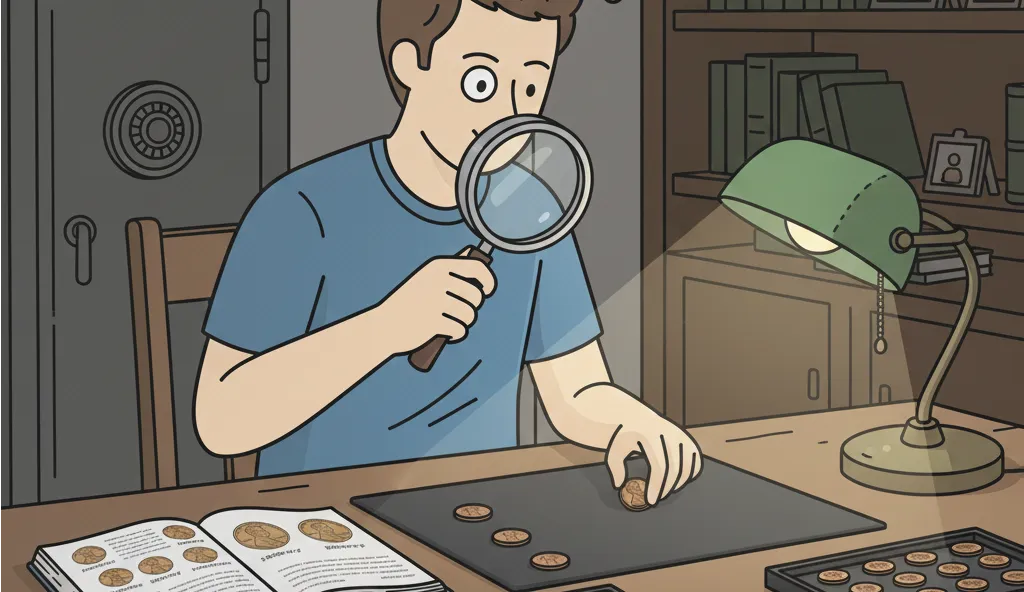
What Wheat Pennies are worth money? To carry out a correct evaluation of a Wheat Penny value at home, you must remove personal feelings and use a small set of tools.
Necessary Equipment
Magnifying Tool: Using a loupe with at least 10x power or a digital microscope, you can identify small details like mint marks and making mistakes.
Light Source: Having a lamp with a color temperature of 5000-5500K, you can see small scratches and the original shine of the metal better.
Scales: Using electronic scales with 0.01-gram precision, you find the weight because it is a main parameter for finding rare metal mistakes.
Magnet: Using a normal ferrite or neodymium magnet, you check the metal parts of the coin easily.
Safety Rules
Cleaning Ban: Doing any chemical or physical cleaning of the coin using soda or vinegar or a brush, you lose 50–90% of its numismatic value.
Holding Rules: Holding the coin only by its edge, you prevent finger marks from causing damage to the front or back sides.
Algorithm for Identifying Main Parameters
The evaluation starts by fixing three main facts: the year of making, the mint mark, and the physical condition — you can easily check it with the best coin value app.
Finding the Year and Mint Mark
Finding the date on the front side to the right of Abraham Lincoln, you look for the mint mark directly under these numbers.
No Mark: Being made in Philadelphia, these coins usually belong to the most common groups.
Letter D: Belonging to the Denver Mint, these coins have the letter "D" below the date.
Letter S: Belonging to the San Francisco Mint, these coins often have a smaller number of pieces and a higher price.
Checking Physical Condition
Using a simple scale based on the Sheldon system at home, we divide coins into groups:
Good (G-4): Having heavy wear, the coin shows Lincoln's shape but the hair and clothes details are gone.
Fine (F-12): Having visible wear, the coin shows the main parts of clothes and wheat but letters start to disappear.
Extremely Fine (EF-40): Having very small wear only on the highest points, the coin keeps almost all details sharp.
About Uncirculated (AU-50+): Showing original shine and almost no wear, the coin has only very light marks from other coins.
Uncirculated (MS-60+): Not being in use, the coin has full original shine and no rubbing marks at all.
Finding the Color Category for Copper Coins
The color of a copper coin changing its price very much, we look at three categories:
Brown (BN): Being a brown coin, the metal has full oxidation and stays in the cheapest group.
Red-Brown (RB): Keeping from 10% to 90% of the original orange-red shine, this coin has a better price.
Red (RD): Keeping more than 90% of the original shine, this coin is rare and costs much more money.
List of Rare Dates and Mistakes to Check
Giving you a technical list of "Key Dates" and known mistakes, we show you what to look for first.
Key Dates
1909-S VDB: Finding the letters V.D.B. on the bottom of the back side on a San Francisco coin, you find a very rare piece.
1909-S: Not having initials but having a very small number of pieces, this coin stays expensive.
1914-D: Being a very rare date for Denver, this coin is often faked by changing the numbers on a 1944-D coin.
1931-S: Being the last rare piece in the series, it has a high value for collectors.
Making Mistakes
1943 Copper: Finding a 1943 cent with a brown color not sticking to a magnet, you must check if it weighs 3.11 grams.
1944 Steel: Finding a 1944 cent with a silver color sticking to a magnet, you find a rare mistake because it should be copper.
1955 Doubled Die (DDO): Seeing a clear double image of the date "1955" and the word "LIBERTY," you see the picture looking like two layers.
1922 "No D": Finding a 1922 coin without a mint mark, you find a result of an old machine in Denver.
Using Online Resources and Databases
Fixing the coin parameters, you must compare them with current market prices.
Places to Check
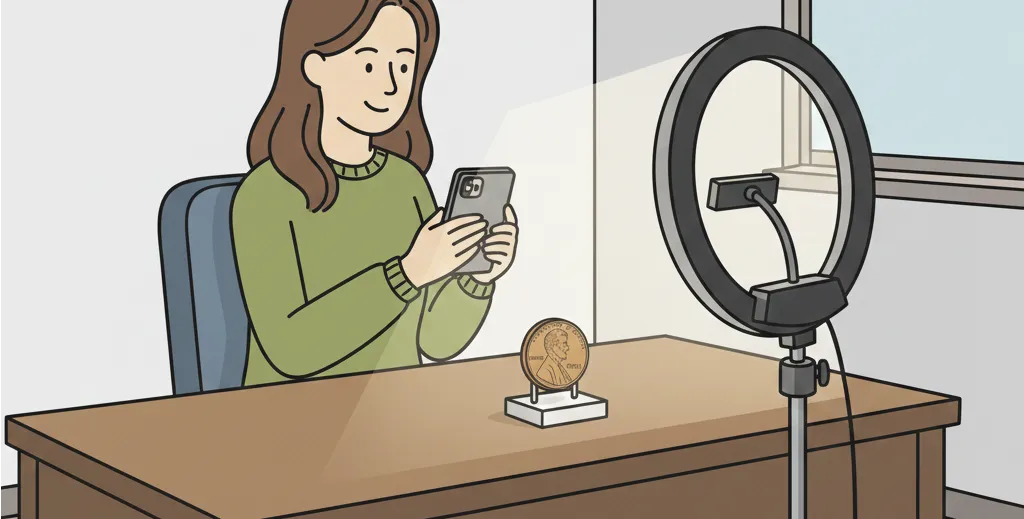
Coin ID Scanner: Comparing your coin with professional photos, the coin scanner app free can find the right grade easily.
PCGS Price Guide: Showing average auction prices for specific grades, this site helps you understand the value of certified coins.
eBay (Sold Listings): Looking in the "Sold" section instead of active listings, you find the most real market prices.
Parameter | Action | Possible Value |
Year < 1934 | Careful look | High (Key Dates) |
Mark "S" | Check numbers | Medium/High |
Color "Red" | Keep shine | High (Any year) |
Magnet (not 1943) | Check weight | Mistake (Steel) |
No Magnet (1943) | Check weight | Mistake (Copper) |
Final Steps and Packing
Finding a potentially rare coin like 1909-S or 1955 DDO, you must put it in a safe place.
Storage
Using special cardboard holders with plastic windows or plastic capsules, you prevent damage. Not using normal tape or plastic bags with PVC, you avoid chemicals hurting the metal surface.
Asking Professionals
Costing from 30 to 150 dollars per coin, professional grading is good only for coins worth more than 200 dollars. Finding a coin worth only 10 dollars, you spend more money on the service than the coin price.
Identifying Altered Dates and Mint Marks
Learning to see the difference between a real rare coin and a fake piece being a very important skill for every home collector.
Looking at the numbers of the date with a high-power loupe, you often see small lines or different colors around a single number.
Bad people often taking a common 1944-D coin and changing the first four into a one, they try to make it look like a rare 1914-D piece.
Looking for a small gap or a different shape in the letters of the mint mark, you can find signs of someone gluing a letter "S" onto a Philadelphia coin.
Understanding Die Cracks and Lamination Errors
Finding small lines on the metal surface not being scratches but being "die cracks," you can find coins with a very interesting history. These errors appearing during the making process because the metal stamp was old and broken, they make every coin look different. Looking at the surface of the coin and seeing pieces of the metal coming off, you find a "lamination error" caused by bad metal quality. These coins having no high price in bad condition, they still stay interesting for people collecting unusual pieces.
The Importance of Population Reports
Using "Population Reports" from professional sites like PCGS or NGC, you can find how many coins of a certain grade exist in the world.
Knowing that only five pieces of a certain year exist in MS-67 Red condition, you understand why the price stays so high at auctions.
Checking these reports before selling your collection, you avoid giving away a very rare grade for a low price.
Not being able to find your exact coin in these lists because yours is not certified yet, you use the information to dream about the possible future value.
Final Rules for Verification
Home checking being only the first step, the main difficulty stays in finding fakes. Making fakes by adding an "S" or changing numbers, bad people try to trick collectors. Using a 10x loupe and looking at the metal surface, you can often see marks of mechanical work or different colors.
Understanding these technical facts, the Wheat Penny owner can perform a primary selection and avoid losing money when selling the collection.