
Is Your 2000-P Sacagawea Dollar Worth Keeping?
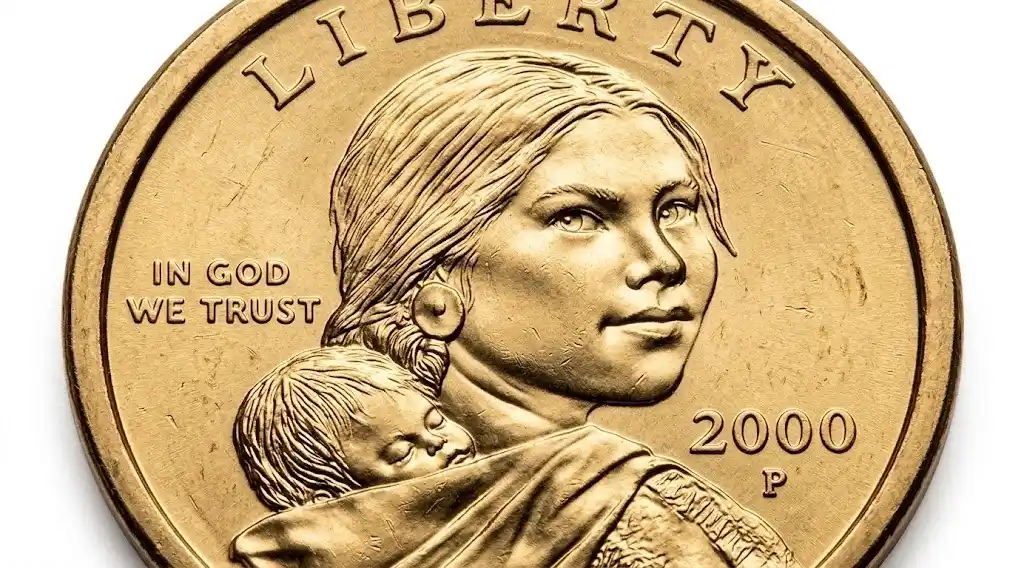
Before spending this coin, check for several characteristics actively pursued by collectors.
Determining the potential Sacagawea dollar 2000 P value requires significant attention to minting details.
Many specimens found in circulation hold standard face value.
Only rare production errors significantly increase total worth.
Evaluation of every coin must follow a specific, rigorous algorithm.
Primary tasks involve identifying distinct damage signs.
Do not ignore minor details possessing critical importance for numismatic assessment.
Technical Coin Specifications
Parameter | Value |
Weight | 8.1 grams |
Diameter | 26.5 millimeters |
Thickness | 2.0 millimeters |
Composition | 88.5% copper, 6% zinc, 3.5% manganese, 2% nickel |
Meeting these parameters constitutes a mandatory condition for authenticity recognition.
Deviations from stated values indicate a counterfeit.
Always use calibrated scales ensuring accuracy to one-tenth of a gram.
Minting Errors and Varieties
Identifying rare varieties requires meticulous inspection of the reverse and obverse sides.
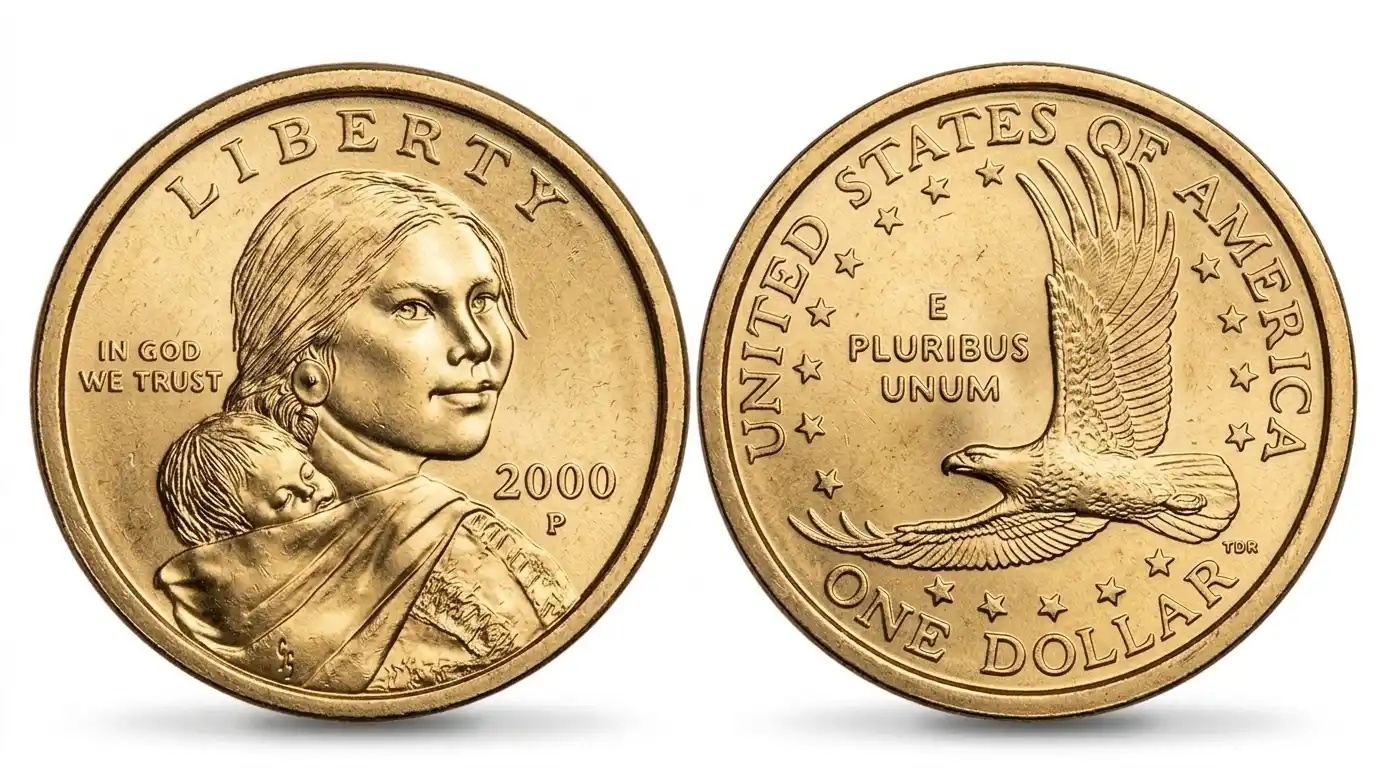
Wounded Eagle
This variety, containing a visible die defect on the reverse, represents high collector interest.
A line crossing the eagle's belly serves as the main diagnostic feature.
Origin of this line stems from damage to the working die occurring during the striking process.
Demand for such specimens ensures a consistently high worth.
Average market price for certified specimens exceeds $500.
Investors prioritizing rare error types often target this specific variation.
Mule Coin
Coins struck using an incorrect combination of dies classify as Mule.
This type assumes using an obverse from a quarter and a reverse from the Sacagawea Dollar.
Lack of regulatory compliance makes this version extremely rare.
Prices for such specimens often reach tens of thousands of dollars.
Known specimen counts remain extremely limited, driving the final price upward.
Authentication of these pieces requires verifying the obverse rim and lettering style.
Cheerios Dollar
Promotional campaigns involving Cheerios cereal included rare 2000 coins released in limited quantities.
Distinctive features lie in the fine details of the eagle tail feathers.
Verification of these details requires using the coin identifier app.
Presence of sharp tail feathers confirms the coin belongs to this specific promotional release.
Specimens retaining original condition show exceptionally high collector value.
Market Value Dynamics
Analysis of current market pricing shows changes driven by sustained numismatic interest.
Period | Average Price | Average Price |
2024 | $4.50 | $350 |
2025 | $5.10 | $420 |
2026 | $6.20 | $500 |
Statistics demonstrate gradual value growth for specimens possessing high preservation degrees.
Common coins showing significant circulation traces are assessed strictly at face value.
Factors Influencing Pricing
Supply Shortage
Limited counts of rare errors → rising overall market demand.
Increased collector interest → rising final sale price.
Coin Condition
Presence of surface scratches → decreasing collector appeal.
Lack of circulation traces → rising market value.
Price formation processes determine the precise balance of demand and supply.
Recognition as a rare variety → sharp price jump on public auctions.
Lower market interest → price stabilization at lower levels.
Understanding these patterns allows making informed financial decisions.
Evaluation Methodology
Determining worth requires a systematic, methodical approach.
Visual Control
Portrait inspection, performed with high precision, serves as a basic quality indicator.
Absence of damage on the portrait increases the potential final price.
Reverse Analysis
Eagle images, undergoing careful analysis, reveal specific die errors.
Presence of strike marks, classified as Wounded Eagle, significantly changes final worth.
Weighing
Using scales showing exactly 8.1 grams confirms authenticity.
Deviation from stated mass indicates poor quality or fraudulent manufacturing.
Minting Detail Analysis
Letter detailing, possessing sharpness, serves as a sign of high factory quality.
Blurred elements, being consequences of die wear, lower potential worth significantly.
Certification Importance
Confirming authenticity through independent, third-party organizations impacts value decisively.
Presence of official certificates, excluding doubts about originality, guarantees buyer trust.
Certified coins, possessing high numerical grades, sell faster on specialized auction sites.
Investing in certification, being a costly procedure, pays off when selling truly rare specimens.
Professional grading companies assign coins points reflecting surface physical condition.
High grading scores are directly proportional to final price growth in competitive markets.
Minting Scale Influence
Massive 2000-P Sacagawea Dollar release, covering millions of individual specimens, limits standard coin value growth.
Coin counts, exceeding current market needs, leave profit chances only for owners of recognized error coins.
Rarity, being the key market driver, remains absent in standard coins retrieved from common wallets.
Market value of standard specimens remains tied to face value in most retail transactions.
Additional Value Factors
Presence of natural patina, formed through atmospheric exposure, may be perceived differently by potential buyers.
Some collectors value natural toning, considering it a sign of coin age and history.
Other buyers prefer coins retaining original mint luster.
Patina influence on final price remains a subjective but significant factor for high-end collectors.
Removing patina via harsh cleaning leads to permanent, irreversible loss of collector value.
Storage Strategy
Proper storage prevents physical condition deterioration over extended timeframes.
Using protective capsules, preventing contact with external air, maintains surface in original condition.
Avoiding excess moisture, potentially provoking corrosion, remains a mandatory requirement.
Applying materials, containing no reactive acids, guarantees metal safety in long-term perspectives.
Placing coins in high-quality albums, made from inert materials, minimizes damage risk during handling.
Temperature regimes must remain stable, excluding sharp humidity swings.
Market Outlook Assessment
Development forecasts for the coin market, based on historical data, look moderately positive.
Stability of interest in the Sacagawea Dollar, driven by unique design characteristics, maintains specimen liquidity.
Expect no explosive value growth for standard coins found in general circulation.
Focusing on error searching, providing real profit chances, remains a priority strategy for active collectors.
Constant data updates on rare finds help owners adjust expectations according to real-time market trends.
Analyzing large auction results allows viewing real demand for specific coin types and series.
Search Recommendations
Checking every coin, landing in your hands, is a mandatory action for serious numismatists.
Using specific tools, facilitating visual control, increases rare error search efficiency.
Regularly tracking auction results, reflecting current demand, gives actual ideas about current market price.
Understanding worth formation mechanics turns the sorting process from random actions into methodical, data-driven analysis.
Investing time into studying nuances, distinguishing standard specimens from rare finds, remains the only reliable way to extract profit.
Analysis Tools
Digital scales
Directional lighting
Lint-free gloves
Using quality optics allows detecting tiny deviations invisible to the naked eye.
Applying digital scales guarantees material compliance with established mint standards.
Ensuring bright, directed lighting facilitates revealing subtle die defects.
In-Depth Minting Study
Only deep understanding of technical minting aspects allows distinguishing random defects from valuable, recognized rare varieties.
Working with numismatic material, requiring time and concentration, brings results as discovered rarities.
Stay informed about relevant numismatic world news by following authority organization publications.
Informational awareness, supplemented by practical skills, forms the foundation for successful activity.
Do not limit yourself to surface inspection, always striving for deep analysis of every specimen.
Attention to details, being the main tool in this search, will lead to expected, measurable results.
Success, measured not only in dollars but also in accumulated knowledge, will be the ultimate reward for spent efforts.
Every 2000-P Sacagawea Dollar specimen hides a potential history, revealed through careful, persistent study.
Practical Numismatic Tips
Analysis processes must be methodical, excluding skipped details during inspection.
Coin Cleaning
Exclude chemicals
Use air
Applying chemical compositions for surface cleaning leads to permanent metal damage.
Best ways to remove dust involve using compressed air or extremely soft brushes.
Cleaning mechanically, possessing high scratch risks, remains highly undesirable for valuable coins.
Cataloging
Record dates
Mark errors
Systematizing data about every found coin allows tracking price changes efficiently.
Using specialized software facilitates accounting for held specimens over multiple years.
Regularly updating records helps maintain information currency about your growing collection.
Education
Read catalogs
Visit exhibits
Reading professional literature expands knowledge bases about specific error types.
Visiting public exhibits provides unique opportunities to see rare specimens in person.
Talking to professional numismatists helps understand value formation mechanisms deeper.